The Bluegrass Cardinals
Biography
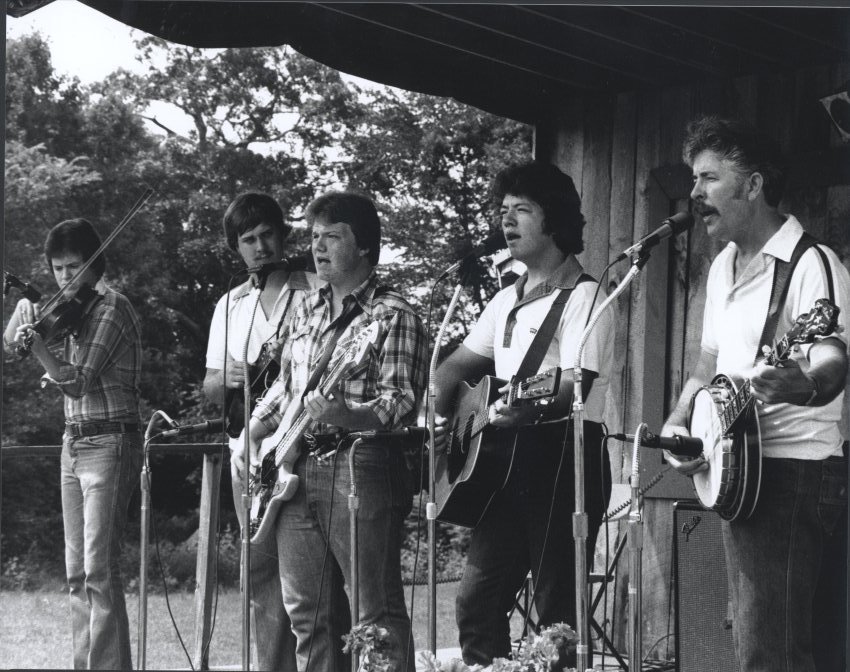
The Bluegrass Cardinals were a pioneering bluegrass band that made a lasting impact on the genre from their inception in 1974 until their disbanding in 1997. Renowned for impeccable harmonies, innovative arrangements, and a commitment to fostering young talent, the band played a significant role in shaping modern bluegrass music. Journalist Frank Godbey once offered that “a keen sense of timing and dynamics make their performances live and breathe, and their knowledge of and respect for tradition give them an honesty and believability.”
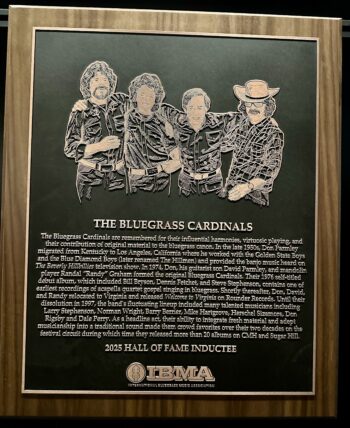
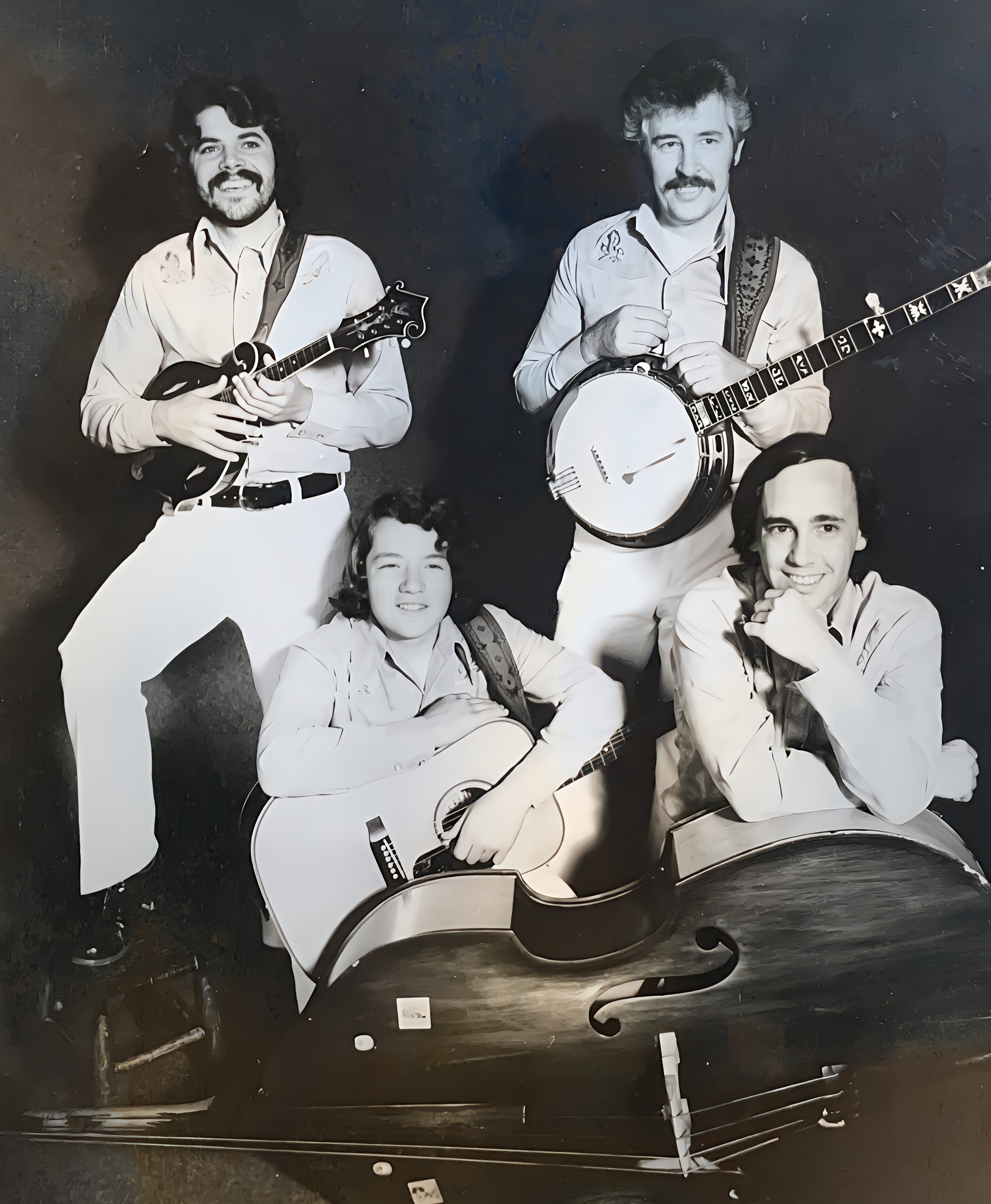
The band was founded in California in 1974 by Don Parmley, his teenage son David Parmley, and Randy Graham, and Bill Bryson. Don Parmley, a Kentucky native, had already established himself as a skilled banjo player, performing with groups such as the Golden State Boys and the Blue Diamond Boys (later renamed The Hillmen). From 1964 to 1973, he showcased his banjo talent to a national audience by providing the soundtrack for the popular television show The Beverly Hillbillies.
The Bluegrass Cardinals originally intended their group to be a part-time endeavor. Their first major engagement—a 15-week residency at Busch Gardens in Los Angeles—gave them the confidence to pursue music full-time. The band’s name, suggested by Betty Parmley, Don’s wife, was inspired by a cardinal decoration on the family’s refrigerator and the bird’s status as the state bird of several bluegrass-loving states.
In 1976 the band released their debut album, The Bluegrass Cardinals, on the Sierra label. It showcased other early members: fiddler Dennis Fetchet, bass player Bill Bryson, and bass singer Steve Stevenson. The album featured one of the earliest examples of unaccompanied gospel singing in bluegrass, establishing their reputation as vocal innovators. Songs like “There Is a Fountain” blended traditional bluegrass with fresh arrangements, earning critical acclaim. One of the album’s songs, “Girl at the Crossroads Bar,” was picked up by Larry Sparks and became a fan favorite.
Toward the end of 1976, the band relocated to Virginia to capitalize on the genre’s popularity in the eastern United States. The move was acknowledged with the release of their second album, Welcome to Virginia (Rounder Records, 1977). Featuring a mix of traditional and contemporary songs, the album included standout tracks such as “Blue-Eyed Boston Boy” and unaccompanied hymns like “We Know the Man.” The band’s move to Virginia proved fruitful, granting them access to larger audiences and opportunities to perform at prestigious venues. This album also marked the addition of John Davis on bass and Warren Blair on fiddle, with Jack Davis (John’s father) serving as manager and booking agent.
The Bluegrass Cardinals quickly gained prominence after relocating to Virginia. In 1977, they performed at high-profile events for the Library of Congress, the Smithsonian Institution, and even at the White House during a lawn party hosted by President Jimmy Carter.
Lance LeRoy of the Lancer Agency assumed management and booking duties for the Bluegrass Cardinals in June 1978. During this period, he produced their next album, Livin’ in the Good Old Days, released on the CMH label. Featuring the same recent lineup, the album showcased, in LeRoy’s words, “three voices in better harmony and with more effective arrangements than any other actively performing group in bluegrass music.” LeRoy, under the pseudonym Brett F. Devan, wrote much of the band’s history for a variety of media outlets.
In 1979 the band released another CMH project, Cardinal Soul, which marked the departure of Randy Graham and the addition of mandolinist David Ratcliff and bass player Ernie Sykes. Despite the changes, the new configuration preserved the classic Bluegrass Cardinals sound. That year also saw the group’s first guest appearance on the Grand Ole Opry.
A double-album set on CMH, Live & On Stage, was released in 1980. Don and David Parmley, along with Ernie Sykes, were joined by newcomers Mike Hartgrove (fiddle) and Bob Clark (mandolin). The collection featured guest appearances by bluegrass luminaries Don Reno, Chubby Anthony, Little Roy Lewis, and Buddy Spicher.
The group released their final album for CMH, Where Rainbows Touch Down, in 1981. The project introduced yet another, completely new, lineup, including Norman Wright (mandolin, guitar, vocals), Tim Smith (fiddle), and Ronnie Simpkins (bass and vocals). The band also embarked on their first overseas tour, performing in Holland, Belgium, Sweden, and Switzerland.
In 1983, the Bluegrass Cardinals signed with Sugar Hill Records. Over the next three years, they recorded three albums for the label: Cardinal Class, Home is Where the Heart Is, and their first all-gospel album, The Shining Path. Key members during this period included mandolin player Larry Stephenson, Mike Hartgrove, and John Davis and/or Dale Perry on bass. The band expanded their reach with tours in the Middle East and Europe, as well as television appearances on programs such as Nashville Now and Fire on the Mountain.
The Bluegrass Cardinals launched their own record label, BGC Records, in 1987. Over the next decade, they released six projects: On Stage in Nashville, New and Old Favorites, Families of Tradition, What Have You Done for Him?, My Kinda Grass, and Mountain Girl. These releases featured a rotating cast of musicians, including bass players Barry Berrier and Lester Deaton, mandolin player Herschel Sizemore, and vocalists Greg Luck and Keith Pyrtle. One notable release, Families of Tradition, paired the Parmley family with Del McCoury and his sons, earning an IBMA award for Collaborative Recording of the Year.
In 1993 David Parmley left the band to unsuccessfully pursue a solo career in country music. He later worked as a bus driver for country stars, including Rascal Flatts. He also formed his own award-winning group, Continental Divide. Don Parmley kept the Bluegrass Cardinals together for several more years before disbanding the group in 1997. In 2000 Don and David reunited to do a few “Cardinal Reunion” shows with members of Continental Divide.
Gary Reid is a bluegrass music historian, journalist, producer, and actor based in Roanoke, Virginia.